
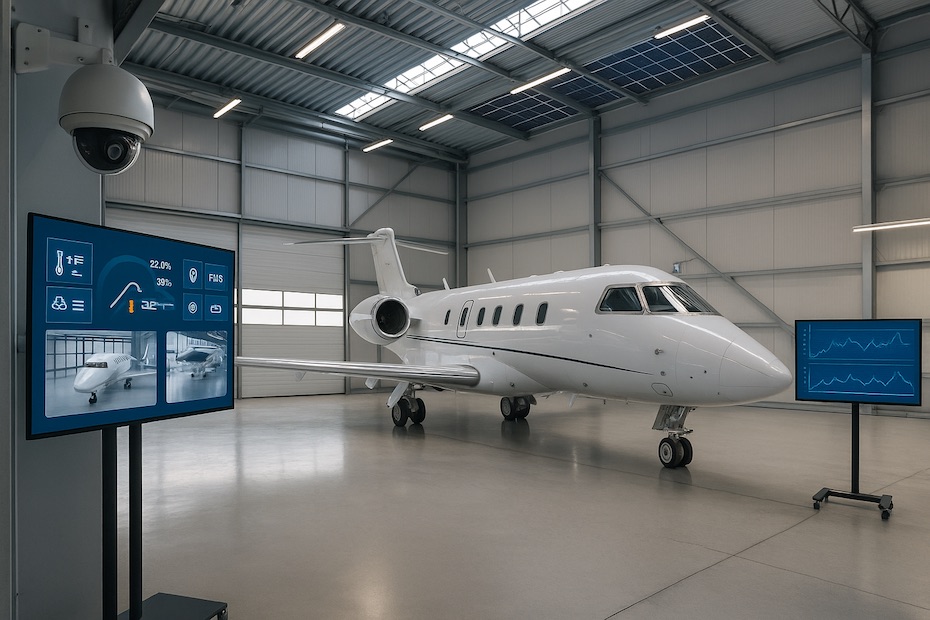
You’re witnessing a shift in aviation real estate that’s changing how aircraft are housed, maintained, and managed. Smart hangars—once a novelty—are becoming essential infrastructure, integrating automation, sustainability, and digital connectivity into aviation property. Whether you’re an investor, pilot, or airport operator, understanding how technology transforms hangars is crucial for staying ahead. This article breaks down the practical innovations, investment angles, and operational advantages driving this movement forward.
Smart Hangars: What You’re Actually Getting
When you step into a smart hangar, you’re not just opening a set of doors to park an aircraft—you’re entering a tech-enabled command center. These hangars give you control over access, lighting, temperature, and even maintenance routines, all through an app or cloud dashboard. Think of it like having a “smart home” for your plane. Climate control systems automatically adjust based on external weather, keeping interiors safe from corrosion or frost. Surveillance cameras and biometric entry systems upgrade your hangar’s security far beyond a padlock and key.
At the core of this setup are sensors—monitoring humidity, detecting motion, and sending alerts if there’s any deviation. And you don’t need to be on-site. Remote access lets you warm up the engine heaters, prep lighting for early takeoff, or track aircraft movement from anywhere. These aren’t gimmicks—they’re time-saving, condition-preserving tools that give you better control and peace of mind.
Automation Is Driving the MRO Game
If you’re involved in MRO (maintenance, repair, and overhaul), you’ve already seen how time equals money. Drones are now replacing ladders for surface inspections. They’re programmed to follow flight paths around the aircraft, taking high-resolution images that pinpoint potential damage—saving labor and reducing inspection time by over 50%. And since they feed data directly into diagnostic software, you’re getting faster feedback on what needs fixing.
Inside the hangar, automated guided vehicles (AGVs) are helping reposition aircraft with surgical precision, reducing collision risk and minimizing manpower requirements. You’re also seeing robotic arms assist with specific repetitive maintenance tasks, improving consistency and reducing fatigue-related errors. On-demand 3D printing of parts speeds up repairs by cutting the wait time for shipping components, while AI-driven platforms log all actions securely into a blockchain ledger. That kind of transparency and recordkeeping is gold for compliance and resale value.
Keeping Track with Real-Time Location Systems
It’s easy to lose hours tracking down a single misplaced tool or part. That’s why more hangars are implementing RTLS—real-time location systems—to monitor the exact position of tools, ground equipment, and personnel. With sensors embedded in tools and fixed infrastructure, you’ll know exactly where every asset is. That helps prevent Foreign Object Damage (FOD), streamlines workflows, and cuts unnecessary delays.
This is particularly effective when managing large operations or servicing multiple aircraft. Tool check-in/check-out systems tied to employee badges add accountability. And the moment something is out of place, your system notifies you. These layers of automation remove guesswork and keep your timelines tight—especially when every minute of Aircraft-on-Ground (AOG) status costs you thousands.
Smarter Hangars Mean Greener Operations
Technology isn’t just about convenience. You’re now being asked to demonstrate environmental accountability—especially if you’re dealing with larger fleets, commercial tenants, or government contracts. Smart hangars help you get there. Automated HVAC and lighting systems adjust in real time based on occupancy, aircraft presence, and ambient conditions. This kind of load-responsive control trims your energy consumption without compromising function.
Many newer builds are incorporating solar panels into their roofing and battery storage systems on-site. This lets you generate power, reduce grid reliance, and even qualify for sustainability incentives in some jurisdictions. You’re not just lowering your operating costs—you’re also boosting the long-term market value of the hangar by meeting green building standards.
The Investment Case for Aviation Tech Properties
As a real estate investor, you’re always looking for leverage—something that gives a property edge in pricing, tenant interest, or operational yield. Smart hangars check all three boxes. They command higher lease rates, reduce maintenance overhead, and attract forward-thinking clients who are actively seeking automation and reliability. Buyers will pay more for hangars that come ready with IoT systems, energy efficiency certifications, and security tech already in place.
You’ve probably noticed more airpark communities integrating hangar homes with smart controls. From remote access to hangar doors to charging ports for electric aircraft, the built-in convenience gives these homes broader appeal to both pilots and non-pilot investors looking for high-function, future-ready properties. Plus, as demand grows for electric vertical takeoff and landing (eVTOL) platforms, hangars with EV-ready infrastructure will rise in value faster than traditional builds.
Zoning and Tech Considerations You Can’t Ignore
Building or upgrading to a smart hangar isn’t just plug-and-play. You’ll need to navigate local zoning codes, FAA compliance, and cybersecurity standards—especially if you’re adding RTLS or remote monitoring. Some jurisdictions may restrict drone use around airfields or impose noise and power usage caps. That means early coordination with airport authorities and permitting offices is key to avoid costly delays.
Your digital systems also need to be secure. Cyber vulnerabilities in aviation can have real-world consequences. You must work with tech vendors experienced in aviation environments to ensure secure data storage, encrypted transmission, and backup systems that protect critical operational records. In short, don’t just think about the tech—think about how it’s regulated and protected.
Preparing for eVTOL and Urban Air Mobility
You’ve probably noticed the buzz around eVTOL aircraft and Urban Air Mobility (UAM). These platforms are closer to reality than most people realize, and they’re going to need infrastructure that’s fast, digital, and compatible with autonomous control systems. That’s where smart hangars come in. You’re not just planning for planes anymore—you’re preparing for vertical aircraft, drone fleets, and AI-directed ground operations.
Hangars built with modular layouts, sensor networks, and high-speed charging stations will be better equipped to support UAM demands. Integration with vertiports—dedicated takeoff and landing zones for eVTOLs—means your real estate could serve more than just traditional aircraft. By planning ahead, you’ll create a property that’s adaptable, valuable, and future-proofed against the next wave of aviation innovation.
Smart Hangars: How Technology Is Reshaping Aviation Real Estate
- Remote-controlled lighting, doors, and climate systems
- Drone-based aircraft inspection with real-time reporting
- RTLS for tool tracking and damage prevention
- On-site 3D printing and blockchain-based maintenance records
- Energy-efficient HVAC and integrated solar power
In Conclusion
If you’re serious about staying competitive in aviation real estate, smart hangars aren’t optional—they’re essential. They improve your operational efficiency, attract better tenants, and position your property for long-term growth in a tech-driven industry. With advancements in AI, sustainability, and air mobility coming fast, now’s the time to invest in hangars that think for themselves.
Smart hangar technology evolves daily. For real-time analysis of IoT implementations, energy efficiency benchmarks, and eVTOL infrastructure requirements, visit chrysilioschrysiliou.net.

Chrysilios Chrysiliou is a commercial real estate executive at RDPH Properties, Inc. with a diverse background in aviation and entrepreneurship. A former Greek Air Force Academy graduate, flight instructor, and flight school co-owner, he now leverages decades of strategic leadership to identify and develop high-value real estate opportunities.