
If you’re developing or managing aviation property today, sustainability is no longer a nice-to-have—it’s a business imperative. The aviation sector is under pressure to reduce environmental impact, and real estate plays a key role in that shift. Hangars, terminals, airparks, and logistics hubs can all be designed and operated in smarter, greener ways that lower emissions, save money, and meet growing tenant expectations. In this article, you’ll learn how to integrate sustainability into your aviation development—from site selection and design to energy, water, and material choices—so you can create projects that perform well financially and make a real difference environmentally.
Start With Smarter Site Selection
Before breaking ground, the most sustainable choice you can make is selecting the right site. Look for previously developed land—old industrial zones, decommissioned runways, or underutilized airport parcels. Avoiding greenfield development helps preserve biodiversity, limits deforestation, and simplifies permitting. If you’re building on active airport grounds, choose sites with minimal ecological sensitivity or ones already served by taxiways and infrastructure.
You should also evaluate the microclimate and solar exposure of the property. South-facing hangars can benefit from natural daylight and solar gain, reducing lighting and heating demands. Conducting a basic solar feasibility study early can identify potential for rooftop arrays or ground-mounted panels, making future upgrades easier.
Design Energy-Efficient Hangars and Buildings
Once you’ve picked the site, your design choices determine long-term performance. Focus on insulation, daylighting, and orientation. High R-value wall and roof assemblies, sealed door systems, and double-glazed windows cut down on heating and cooling loads—especially in large-volume structures like hangars. Installing skylights or polycarbonate panels brings in natural light without increasing heat, improving comfort and reducing electricity use.
Integrating automated lighting and occupancy sensors further reduces energy waste. In aviation real estate, where buildings often sit idle between uses, motion-sensing controls can slash operating costs. You should also look into radiant floor heating or VRF HVAC systems, which perform better in wide-open spaces compared to traditional forced air.
Generate Power Onsite with Renewable Energy
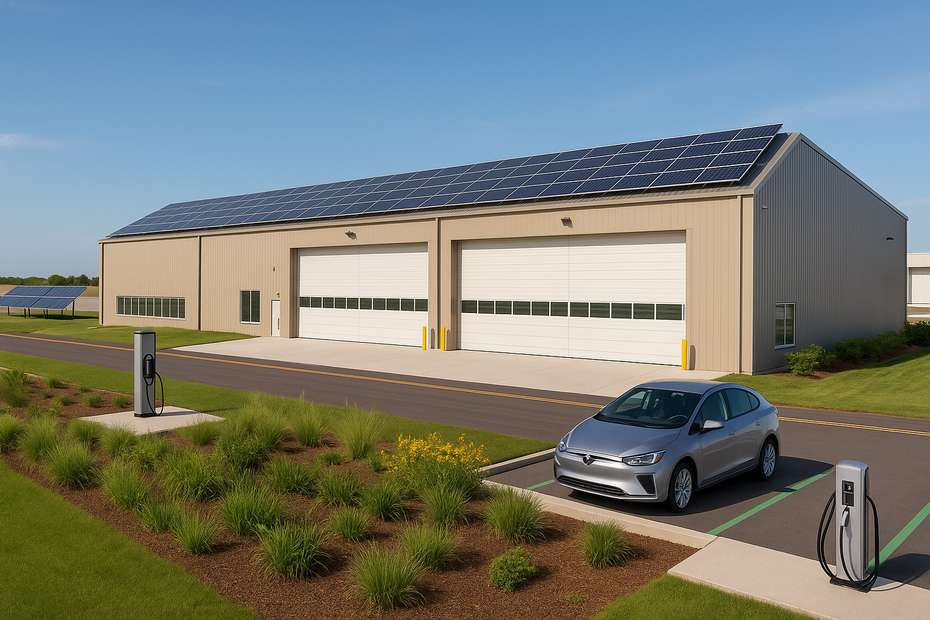
Solar is one of the most effective upgrades you can implement. Rooftops, carports, and nearby land parcels are all opportunities to generate clean energy and reduce utility dependence. Hangars often have large flat or gently sloped roofs—ideal for photovoltaic systems. In many jurisdictions, you can connect to the grid and receive credits through net metering or power purchase agreements (PPAs), which allow you to install solar with little or no upfront cost.
Some facilities, like Clay Lacy Aviation’s LEED Gold–certified terminal in Van Nuys, California, have already proven the model works. They installed enough solar to offset 100% of building electricity demand while improving their operational appeal to high-end customers.
Capture and Control Stormwater Effectively
Sustainability isn’t just about energy—it’s also about how your site handles water. Airport developments often have large impervious surfaces like ramps, roads, and roofs, which increase stormwater runoff. That runoff can pick up pollutants like oil, de-icing fluid, or sediment if left unmanaged.
You can reduce the impact by installing rain gardens, bioswales, or detention basins with native vegetation to filter and slow runoff. Permeable paving in low-traffic areas is another smart choice. On the building side, capturing rainwater for irrigation or non-potable uses, like washdown areas, lowers utility bills and protects local watersheds.
Use Low-Impact Materials and Minimize Waste
When selecting materials, opt for products that are recycled, locally sourced, or low in embodied carbon. Recycled steel, precast concrete, engineered wood, and low-VOC paints reduce environmental impact and support healthier indoor air quality. You should also consider the longevity of materials—choosing finishes and components that won’t need frequent replacement lowers long-term costs and avoids unnecessary waste.
During construction, a well-managed jobsite can divert more than 75% of waste from landfills by sorting wood, metal, cardboard, and concrete. Set waste-reduction targets with your general contractor and include diversion tracking in project reporting. These measures can help you qualify for LEED points or other green building certifications.
Plan for Certification and Long-Term Monitoring
Green building certifications like LEED, BREEAM, or WELL help verify your sustainability claims and signal quality to tenants and investors. While certification isn’t mandatory, it creates a framework that improves your design and provides a roadmap for performance. Many airports already require certain projects to meet LEED Silver or higher as part of their sustainability plans.
Beyond certification, plan to measure and report performance post-occupancy. Install submeters for energy and water use, and use digital dashboards to track trends. Over time, this data helps you optimize operations and catch issues early. Even basic monitoring can identify savings opportunities worth thousands annually.
Align With Airport-Wide Sustainability Goals
If your project sits within a larger airport environment, coordinate with the airport’s environmental team. Most major airports now have sustainability plans or Airport Carbon Accreditation goals. Contributing to those initiatives—by reducing your emissions, managing runoff, or installing EV infrastructure—strengthens your partnership and aligns you with future funding and growth opportunities.
You can also gain exposure through airport-led sustainability programs or awards, which boost your project’s credibility. If you offer community benefits—like public EV charging, education outreach, or wildlife habitat protection—you’ll build support from local regulators and residents.
Key Ways to Build Sustainable Aviation Property
- Use previously developed or cleared sites
- Design for energy efficiency and daylighting
- Install rooftop solar and water-saving systems
- Choose low-impact, long-life building materials
- Seek green certifications and monitor performance
In Conclusion
Sustainable aviation real estate is no longer just a forward-thinking concept—it’s today’s best practice. From the ground you build on to the energy you generate and the materials you use, each decision influences long-term performance and environmental responsibility. When you integrate renewable energy, manage water wisely, reduce waste, and align with airport-wide climate goals, you not only future-proof your project—you make it more valuable to buyers, tenants, and the public. With smart planning and consistent execution, you’ll create properties that lead the sector toward a cleaner, more resilient future.

Chrysilios Chrysiliou is a commercial real estate executive at RDPH Properties, Inc. with a diverse background in aviation and entrepreneurship. A former Greek Air Force Academy graduate, flight instructor, and flight school co-owner, he now leverages decades of strategic leadership to identify and develop high-value real estate opportunities.