
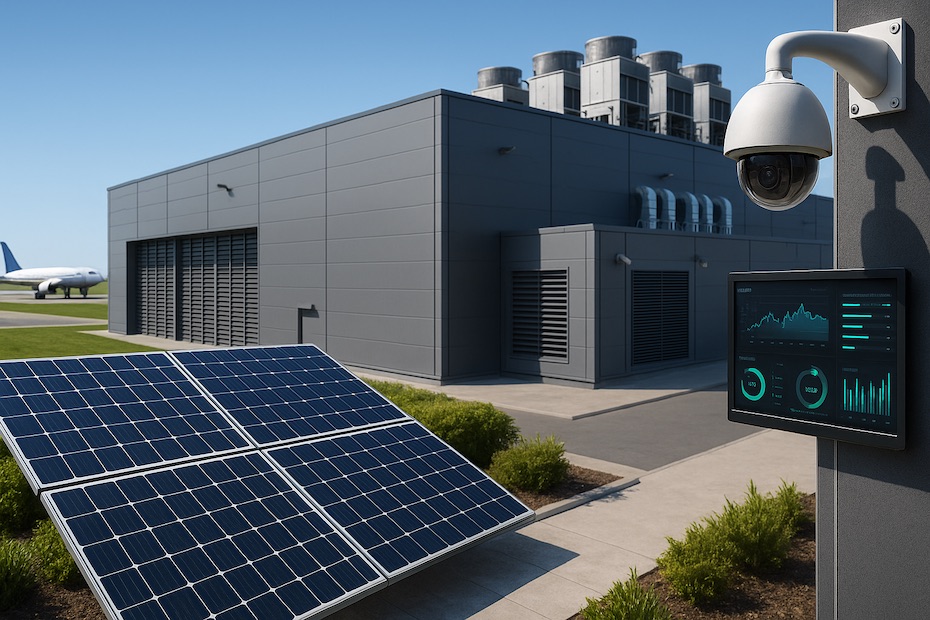
You’re seeing it more often—data centers cropping up near major airports, reshaping the surrounding real estate like never before. What was once dominated by logistics hubs and hotel developments is now welcoming a new neighbor: the hyperscale server farm. This article walks you through how the rise of edge computing, airport-adjacent infrastructure, and global data demands are creating opportunities—and challenges—in this high-stakes convergence between tech and aviation real estate.
Proximity and Performance: Why Airports Make Sense
When you build data centers near airports, you’re not just placing them next to runways—you’re strategically reducing latency. Speed matters, especially for financial services, defense applications, streaming platforms, and real-time logistics tracking. Airports already have strong power grids, fiber lines, and security—elements you’d need to spend millions replicating elsewhere. By plugging into existing infrastructure, you’re cutting build times and maximizing uptime without starting from scratch.
The FAA’s regulations have even helped maintain a buffer zone that discourages residential expansion too close to airports. That means fewer zoning issues and more room for expansion, two assets you’ll rarely find in crowded urban cores. Add the logistical advantage—quick hardware delivery via air freight—and you’re suddenly looking at a real estate package that checks boxes both for speed and scale.
Airport-Area Real Estate: Rising in Value
As soon as data center operators move in, land prices typically follow. You’ve probably noticed it in places like Northern Virginia’s Dulles corridor, Dallas–Fort Worth, or Phoenix—regions where airport-adjacent data parks are driving bidding wars among REITs and hyperscalers. Why? Because you’re not just buying dirt—you’re buying power access, cooling potential, and regulatory ease.
If you’re in real estate development or planning, this shift means you need to rethink valuations. The land may look like industrial space, but it’s carrying tech-sector premiums. Even small parcels near high-traffic airports can be worth triple what they were just five years ago, and the cap rate expectations have shifted accordingly. Leasing terms now often reflect data-resilience clauses, energy pricing escalators, and priority for backup grid access.
Energy and Cooling: A New Kind of Utility Challenge
You can’t talk about airport-adjacent data centers without addressing their demand for power and cooling. These aren’t small server rooms; they’re energy-intensive fortresses that need redundancy, load balancing, and grid stability. That’s where co-location near airports becomes both a solution and a problem.
You’re tapping into existing utility corridors built to serve terminals, hangars, and MRO facilities. But those corridors weren’t designed for megawatt-scale server loads. So now, utility providers are rewriting grid maps to serve data loads. In places like Frankfurt, Singapore, and Atlanta, you’ll see new substations going up just to handle the dual needs of aviation and hyperscale tech. This co-investment is rewriting what airport utility planning looks like.
From your position, you must consider future-proofing. That means working with both aviation authorities and grid managers to ensure your real estate project doesn’t bottleneck at the utility level.
Security Synergies and Regulatory Compliance
If your clients are in sectors like banking, healthcare, or defense, they’re already asking about compliance. That’s where airport-adjacent data centers offer a subtle advantage. Most major airports are already within enhanced security zones—monitored, fenced, and protected.
By colocating within these zones, you’re offering a baked-in security asset that can simplify audit trails and satisfy regulators. Some developers even partner with airport security for shared surveillance or perimeter management. For data tenants that prioritize compliance (think HIPAA, FINRA, or even GDPR spillover), that added layer can be a differentiator.
This is especially valuable if you’re marketing to government contractors or defense firms. The optics and operations of locating in a hardened facility near a secure airport can open doors during procurement bids.
Local Governments Are Leaning In
You’re not the only one paying attention. Local governments are racing to court data centers with zoning incentives, tax abatements, and fast-track permitting. Why? Because these centers bring in millions in property tax while consuming far fewer public services than residential or retail development.
Counties like Loudoun (VA), Cook (IL), and Maricopa (AZ) have crafted special economic zones around airport-adjacent tech corridors. If you’re developing in these zones, you’re benefiting from a political environment that actively favors your timeline. That includes expedited permitting, green-lighted substation projects, and airport authorities willing to lease excess land for data infrastructure.
But don’t overlook the strings attached. Public-private partnerships often come with performance metrics or local hiring targets. Be sure your due diligence includes those compliance timelines to avoid clawbacks or headline risk.
Tenant Preferences Are Changing
Historically, airport-area real estate served freight, logistics, and hospitality. But your target tenant is shifting. Today’s tech firms prioritize network proximity, power price stability, and regulatory convenience over foot traffic or signage.
This changes the playbook for how you design and pitch your space. Instead of loading docks, your tenants want fiber redundancy. Instead of reception desks, they need biometric-secured server cages. From a real estate operations view, your leases need to account for energy usage baselines, uptime guarantees, and power usage effectiveness (PUE) metrics.
If you’re not already aligning with master system integrators and hyperscale engineering consultants, now’s the time. Your deals won’t close without technical credibility, especially when you’re working with Fortune 500 IT teams.
A Different Exit Strategy
Think about the asset class you’re building. It’s not just industrial—it’s infrastructure. That means your exit isn’t a retail REIT or multifamily buyer—it’s a digital infrastructure fund, pension-backed utility investor, or even a sovereign wealth partner.
These groups look for long leases, predictable capex, and consistent yields. If you’re structuring these projects right, you’re preparing your property for a 10- to 15-year cash flow timeline. Don’t shortchange the data room—your exit buyer will want fiber maps, energy audit trails, and tenant uptime logs as part of due diligence.
You’re also seeing new co-ownership models emerge—where data tenants build part of the infrastructure but lease the real estate from you. Structuring those correctly can create strong IRR plays while reducing your front-end capex burden.
Top Benefits of Airport-Adjacent Data Centers
- Lower latency and faster data processing
- Access to strong power and fiber infrastructure
- Built-in security due to aviation zoning
- Favorable government incentives
- High land value appreciation potential
In Conclusion
You’re watching a powerful shift: airports are no longer just about moving people and goods—they’re now hubs for digital infrastructure. By aligning your real estate strategy with the needs of the data economy, especially near airports, you’re not just reacting to demand—you’re positioning ahead of it. With the right planning, partnerships, and execution, you’re able to turn this high-tech convergence into a resilient, revenue-generating investment.

Chrysilios Chrysiliou is a commercial real estate executive at RDPH Properties, Inc. with a diverse background in aviation and entrepreneurship. A former Greek Air Force Academy graduate, flight instructor, and flight school co-owner, he now leverages decades of strategic leadership to identify and develop high-value real estate opportunities.