
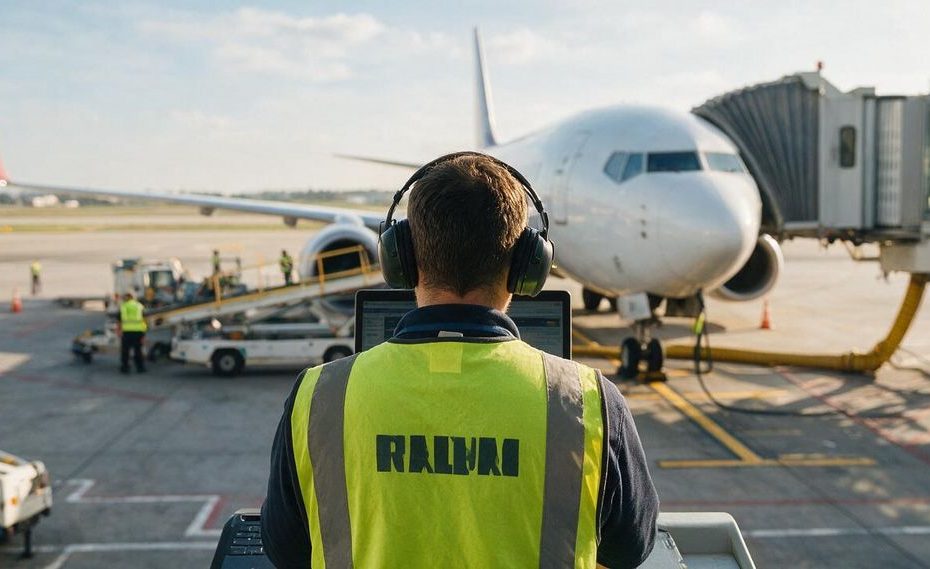
Aviation efficiency now depends on better ground operations because every delay, equipment conflict, and data gap on the ramp reduces aircraft utilization and spreads disruption through the flight schedule. Strong ground operations efficiency shortens safe turnarounds, protects aircraft, limits fuel burn, and improves departure predictability.
A narrow-body aircraft creates value when it is operating flights, yet one late baggage cart, unavailable handler, or incorrect gate update can keep it parked longer than planned. Aviation has already gained from better flight planning, aircraft design, and airspace routing. Your next controllable efficiency opportunity now sits at the gate, on the ramp, and across the taxiway.
Better performance requires more than pushing teams to work faster. You need standardized procedures, shared operational data, reliable equipment, trained staff, and metrics that expose the true source of delay. These measures help you improve on-time performance without trading away safety or adding avoidable pressure to frontline teams.
What Is Aircraft Turnaround Time, And Why Does It Matter?
Aircraft turnaround time is the period between an aircraft arriving at its parking position and leaving that position for its next flight. It matters because every added minute can reduce schedule resilience, increase operating costs, and limit the number of flights an aircraft can complete.
A turnaround combines several connected activities: passenger movement, baggage unloading and loading, cleaning, fueling, catering, technical checks, boarding, load control, and pushback preparation. Many of these tasks happen at the same time, but they still depend on precise sequencing. Fueling may affect boarding procedures, late baggage can delay load control, and an unavailable tug can hold an aircraft after every cabin task is finished. The turnaround is only as reliable as its least predictable activity.
A shorter turnaround isn’t automatically a better one. If teams rush, skip checks, or move equipment without proper clearance, the operation creates more risk than value. Your target should be a repeatable turnaround that finishes within the planned window and gives the flight crew accurate departure information. Consistency gives schedulers a dependable operating base and protects later flights from inherited delays.
Why Have Ground Operations Become Aviation’s Efficiency Bottleneck?
Ground operations become a bottleneck when many independent teams must complete connected tasks using fragmented systems, equipment, and procedures. A delay in one activity can block several others and follow the aircraft through the rest of its schedule.
An aircraft turnaround can involve the airline, airport operator, ground handler, fueling provider, caterer, maintenance team, baggage operation, gate staff, and air traffic control. These parties may use different software, radio channels, checklists, and performance targets. One system may show that boarding is complete while another still lists baggage as outstanding. Staff then spend valuable time confirming which update is correct instead of acting on a shared operating picture.
Workforce pressure makes these gaps harder to manage. A station with inconsistent training or weak scheduling can have enough employees on paper but still lack qualified staff at the required gate. Manual checklists and phone-based coordination add further delay when operating conditions change. Better ground operations efficiency connects staffing, equipment, procedures, and data so that the turnaround works as one coordinated process.
What Is The Real Cost Of Inefficient Turnarounds And Ground Damage?
Inefficient turnarounds cost far more than the initial delay minute. They can increase crew costs, fuel use, passenger disruption, equipment conflicts, maintenance demands, and aircraft downtime.
A delayed departure can miss its planned taxi sequence, arrive late at the destination, and reduce the available preparation time for the following flight. Crew duty limits can turn a manageable delay into a staffing problem. Connecting passengers and bags may need to be rebooked or rerouted. When the schedule has little recovery time, one late departure can weaken on-time performance across several stations.
Ground damage carries an even larger penalty. The International Air Transport Association (IATA) estimates that aircraft ground damage costs the aviation industry more than $4 billion annually. The visible repair is only part of that burden; the aircraft may also leave service, undergo inspection, lose scheduled flying time, and require replacement capacity. Standard procedures, suitable ground support equipment (GSE), clear equipment zones, and reliable training reduce exposure to these costs.
How Do Standards Improve Ramp Safety And Speed?
Standards improve ramp safety and speed by giving every team a common way to complete recurring ground handling tasks. They reduce uncertainty, simplify training, and limit operational variation between airlines, handlers, and airports.
The IATA Ground Operations Manual (IGOM) defines standardized procedures for passenger handling, baggage activity, aircraft servicing, turnaround coordination, load control, and airside oversight. Using common procedures helps frontline employees understand task order, communication requirements, equipment positioning, and stop conditions. A handler serving several airlines can work more consistently when airline-specific variations are kept under control. Standardization also gives supervisors a clearer basis for audits, coaching, and incident review.
Standards still need local operating detail. Gate dimensions, aircraft types, weather exposure, equipment availability, and airport rules can change how a task is carried out at a station. Your local procedures should translate the common standard into clear responsibilities, escalation paths, and handoff points. Measure compliance through observations and operational records rather than relying only on completed training files.
What Is Airport Collaborative Decision Making, And Why Does Shared Data Matter?
Airport Collaborative Decision Making (A-CDM) allows airlines, airports, ground handlers, air traffic control, and network managers to make decisions from accurate, timely operational data. It improves predictability during aircraft turnaround and pre-departure activity.
Without shared information, stakeholders often optimize their own task without seeing the wider operation. A ground handler may prepare for pushback using an outdated departure estimate, or air traffic control may plan around a time that no longer reflects the aircraft’s readiness. A-CDM aligns key milestones so that all parties can respond to the same operational status. Eurocontrol identifies transparent information exchange as a central part of improving resource use and traffic predictability.
Shared data can support better gate planning, pushback coordination, taxi sequencing, and disruption recovery. Accurate readiness times reduce unnecessary engine running and limit waiting after an aircraft leaves the stand. The International Civil Aviation Organization (ICAO) also provides guidance for collaborative air traffic flow management through Doc 9971. Total airport management extends the same operating principle by connecting airside, terminal, landside, and network decisions.
Which Digital And Equipment Changes Improve Ramp Performance?
The most useful changes give teams real-time visibility, prevent equipment conflicts, and replace manual status checks with trusted operational updates. Technology should remove uncertainty from the turnaround rather than add another disconnected screen.
A digital turnaround platform can record milestones for fueling, cleaning, baggage, boarding, doors, load control, and pushback readiness. Mobile tools let employees update task status where the work occurs instead of returning to a desk or calling an operations center. Internet of Things (IoT) sensors can help locate ground equipment and monitor availability. Artificial Intelligence (AI) tools can compare live progress with the turnaround plan, flag likely delays, and help controllers direct resources before a missed milestone becomes a departure delay.
Equipment design matters just as much as software. Well-maintained tugs, loaders, passenger stairs, power units, and belt loaders reduce breakdowns and unsafe substitutions. Electric GSE can lower local emissions, noise, and certain maintenance demands, but deployment depends on charging capacity, duty cycles, parking arrangements, and power availability. The Federal Aviation Administration (FAA) Voluntary Airport Low Emissions (VALE) program supports eligible low-emission vehicles, charging facilities, gate electrification, and related airport improvements in the United States.
How Do You Build A Ground Operations Efficiency Roadmap?
You build a practical roadmap by measuring current performance, identifying the largest sources of variation, and improving one connected process at a time. Begin with operational evidence rather than purchasing technology before the problem is defined.
Establish a baseline using turnaround milestone accuracy, on-time departure, taxi-in and taxi-out time, baggage completion, equipment availability, staffing adherence, ground damage events, and delay causes. Use the same definitions across the airline, airport, and ground handler. A delay coded differently by each party can’t support a reliable investment decision. Shared key performance indicators create accountability and show where operational time is being lost.
Choose a station, aircraft type, or turnaround phase where performance gaps are frequent and measurable. Standardize the process, assign task ownership, train the affected teams, and test any digital change under normal operating conditions. Compare performance before and after implementation using delay minutes, damage exposure, fuel use, labor time, and equipment availability. Scale the change only after employees can use it reliably and the operating benefit is visible.
Implementation also needs a controlled fallback plan. If a mobile tool, data feed, or charging system becomes unavailable, teams must know how to continue safely without creating conflicting records. Review frontline feedback alongside performance data, since employees can identify poor task sequencing and impractical handoffs that dashboards may miss. Sustained improvement comes from operating discipline, not a one-time installation.
Why Do Ground Operations Matter For Aviation Efficiency?
- Aircraft earn only in flight; faster turnarounds raise aircraft utilization
- Ground delays cut on-time performance and raise fuel and crew costs
- Shared ground data reduces taxi times and emissions
- Standard handling prevents damage and safety risk
The Ramp Is Now A Strategic Operating Priority
Aviation can’t improve network reliability without improving what happens before an aircraft leaves the stand. You need predictable turnarounds, shared data, common procedures, qualified teams, and equipment that supports safe movement around the aircraft. Measure the full cost of delay and damage rather than judging performance by departure time alone. Investments should reduce variation, give employees better information, and make operating results easier to verify. Strong ground operations efficiency turns the ramp from a source of hidden disruption into a controlled driver of aircraft utilization, cost management, and schedule reliability.
References
- International Air Transport Association: Ground Operations
- International Air Transport Association: Ground Damage Database
- International Air Transport Association: Ground Operations Manual
- Eurocontrol: Airport Collaborative Decision Making
- Federal Aviation Administration: Voluntary Airport Low Emissions Program
- Federal Aviation Administration: Airport Surface Operations
- International Civil Aviation Organization: Manual on Collaborative Air Traffic Flow Management, Doc 9971
- Airports Council International World.

Chrysilios Chrysiliou is a commercial real estate executive at RDPH Properties, Inc. with a diverse background in aviation and entrepreneurship. A former Greek Air Force Academy graduate, flight instructor, and flight school co-owner, he now leverages decades of strategic leadership to identify and develop high-value real estate opportunities.