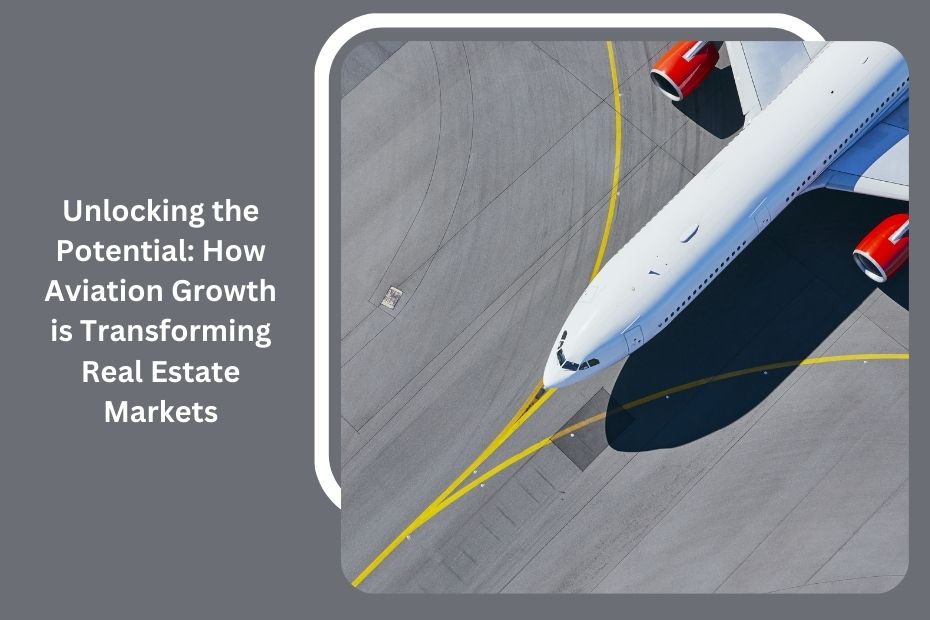
If you’re working anywhere near the intersection of aviation and real estate, you’ve probably seen the signs—airport expansions, private jet traffic spikes, and logistics companies scrambling for nearby land. This isn’t coincidence. It’s a trend reshaping entire regions. As an aviation-driven professional, you know that flight routes don’t just move people—they move capital, demand, and development. What you might not realize is how directly those shifts can influence commercial, residential, and industrial property markets. This article breaks down how aviation growth changes the real estate game—what to watch for, what to plan around, and where the biggest opportunities lie.
When Airports Become Anchors
You’ve likely heard the term “airport city,” and if you’ve worked with any real estate projects near a major hub, you’ve seen the concept in action. The airport isn’t just a place where planes take off—it’s become a core driver of mixed-use development. You’ve got retail, hotels, warehouses, offices, residential towers, and light manufacturing all built with airport access in mind. Think of projects like Airport City Manchester or Dallas/Fort Worth’s AllianceTexas. They’re not fringe developments—they’re business ecosystems tied directly to air traffic volume and international connectivity.
For real estate professionals, this means your best bet isn’t always downtown anymore. It might be 10 minutes from the terminal. The demand is strong because the infrastructure is already in place—roads, rails, utilities, workforce pipelines. That gives investors and developers an edge.
Economic Boosts Don’t Happen by Accident
Airport expansion typically brings more than just a longer runway. You see regional authorities invest in transit links, parking structures, upgraded terminals, and business zones. When MacArthur Airport in New York invested $150 million into shifting its terminal closer to public transit, it wasn’t just about passenger convenience—it was about making surrounding land more viable for commercial real estate.
What’s important here is the ripple effect. Once one major project breaks ground, momentum builds. Businesses relocate. Hotels get planned. You start seeing zoning meetings filled with new proposals. As someone in the industry, that’s your green light to act. You don’t need to wait for the entire project to finish—being slightly early often yields the best long-term value.
Commercial Real Estate Loves Flight Schedules
Companies that rely on speed—freight forwarders, logistics providers, manufacturers with tight distribution chains—want to be near airports. You’ve seen industrial parks pop up along airport corridors for that very reason. The moment an airport adds capacity or expands its cargo terminal, demand for nearby warehousing goes up.
Commercial developments like office parks also benefit. Businesses want to reduce commute times for traveling staff or clients. Leasing space near an airport gives them that edge. If you’re managing or marketing commercial property in one of these zones, highlight proximity in every brochure. Don’t just talk about square footage—talk about runway access.
Private Aviation Drives Luxury Markets
If you operate in luxury or high-end residential real estate, aviation growth brings a very different kind of buyer to your door. In places like Florida, private jet traffic has exploded—and with it, the demand for multimillion-dollar homes within minutes of regional airstrips. Think Naples, Palm Beach, or Scottsdale.
Buyers here aren’t just looking for ocean views or mountain estates. They’re choosing homes based on how quickly they can take off again. Proximity to private terminals, helipads, and FBOs (Fixed Base Operators) becomes a major value driver. If you’re building or selling in this tier, positioning your property with aviation access in mind gives you a serious advantage.
Residential Shifts Near Major Airports
On the other end of the spectrum, broader airport growth affects housing demand in surprising ways. While noise concerns do influence certain areas, new airport projects often include buffers, noise mitigation, and nearby infrastructure improvements. That raises residential appeal in adjacent neighborhoods—especially when those upgrades include schools, transit lines, and jobs.
For urban planners and developers, this is where it gets interesting. Neighborhoods that were overlooked for years can suddenly become hot markets. You’ll see interest from first-time buyers, airport employees, and remote workers who want better connectivity. If you’re involved in multifamily projects, workforce housing, or residential land banking, these are opportunities you don’t want to miss.
Know When Aviation Disrupts More Than It Builds
As with any growth, there are trade-offs. Not every airport expansion is smooth. Some push into residential areas. Others require land seizures or relocate long-standing communities. You’ve probably followed the Taoyuan Aerotropolis plan in Taiwan—it’s ambitious, but it’s also controversial, involving over 40,000 people facing relocation.
If you’re investing or consulting on developments tied to large-scale airport projects, do your due diligence. Regulatory delays, environmental objections, and community pushback can affect your timeline and returns. Local politics play a bigger role than you might expect, and staying connected with planning commissions or public forums helps you assess real risk versus reward.
Futureproofing with Urban Air Mobility
You can’t talk about aviation and real estate without addressing what’s coming next: eVTOL aircraft and urban air mobility (UAM). Major aviation players and mobility startups are already testing flying taxis and vertical air hubs. When that infrastructure becomes reality, property near vertiports will explode in value.
This might feel distant, but you’re already seeing land acquisition and rezoning happening in anticipation of these future modes of travel. If your portfolio includes urban rooftops, open parcels near central business districts, or older commercial lots near transit hubs, now is the time to rethink what they could become.
How Does Aviation Growth Affect Real Estate?
- Boosts demand for commercial and industrial properties
- Raises property values near upgraded airports
- Increases luxury home appeal near private jet access
- Drives mixed-use and airport city development
- Spurs interest in underserved residential zones
Stay Ahead by Thinking Like an Aviator
Growth in aviation doesn’t just move planes—it moves people, capital, and opportunity. When airports expand, entire cities reposition themselves around the new access and potential. As someone in real estate, you’re not just watching the runway—you’re tracking what gets built because of it. Whether it’s warehouses, office towers, luxury homes, or apartment blocks, the airspace above shapes what’s happening on the ground. If you’re not already looking at airport-driven development as a core part of your strategy, you’re missing one of the most consistent growth engines available. Make room for aviation in your property outlook—because the flight path is already charted, and real estate is riding its tailwind.
The skies aren’t the limit—they’re the signal. As aviation continues to shape the next wave of real estate growth, stay ahead of the curve by watching the runways. For more insights on where flight meets the future of property, visit the writer’s Tumblr profile.

Chrysilios Chrysiliou is a commercial real estate executive at RDPH Properties, Inc. with a diverse background in aviation and entrepreneurship. A former Greek Air Force Academy graduate, flight instructor, and flight school co-owner, he now leverages decades of strategic leadership to identify and develop high-value real estate opportunities.