
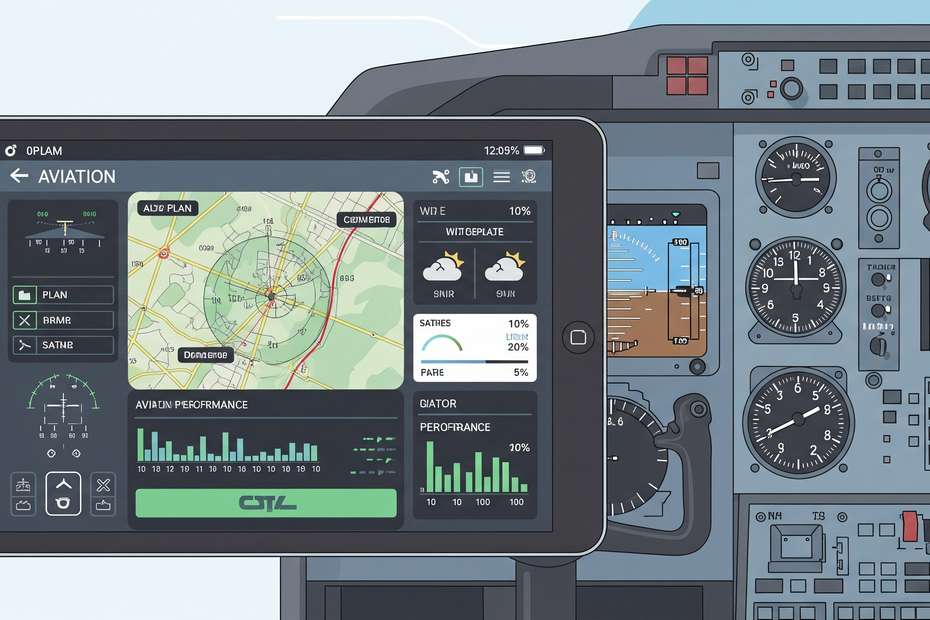
To fly with precision and confidence today, you must master aviation software tools like ForeFlight, Garmin Pilot, Jeppesen EFB, SkyDemon, Avare, iFly EFB, LogTen Pro X, and Garmin Connext.
In this article, you’ll learn why each of these eight tools is considered essential. You’ll see how they enhance planning, situational awareness, safety, and career growth. You’ll also understand their strengths, trade-offs, and how to integrate them into your daily workflow so you operate with professional discipline.
1. ForeFlight: The all-in-one EFB
ForeFlight has become the benchmark for electronic flight bag (EFB) solutions. It integrates pre-flight planning, moving maps, approach plates, weather data, performance calculations, logbooks, and document management in one interface.
What makes ForeFlight powerful is its ecosystem. You can file IFR and VFR flight plans, access terrain and obstacle awareness, view real-time weather overlays, and run detailed runway performance analysis. Airlines, charter operators, and private pilots alike trust it for both domestic and international operations.
When you use ForeFlight effectively, you reduce manual workload. Alerts, real-time data, and automation help you stay ahead in high-stress phases like departure and approach.
2. Garmin Pilot: A versatile EFB with Android support
Garmin Pilot mirrors many of ForeFlight’s features but stands out for its platform flexibility. Available on both iOS and Android, it appeals to pilots who want an alternative to Apple-only ecosystems.
It provides weather overlays, interactive maps, advanced EFB tools, GPS navigation, and integration with Garmin avionics. For many GA pilots, Garmin Pilot is an attractive choice thanks to its seamless sync with cockpit equipment.
When you build aircraft profiles and configure subscriptions properly, Garmin Pilot delivers strong situational awareness at a slightly lower cost than ForeFlight, with reliable cross-platform availability.
3. Jeppesen EFB: Trusted global charting
Jeppesen remains the gold standard for aviation charts. Its EFB suite is trusted by airlines, corporate operators, and professionals worldwide for chart accuracy, navigation databases, and regulatory compliance.
Unlike other apps, Jeppesen’s strength is reliability. Its charts update frequently and carry regulatory trust, which is critical when flying internationally or in complex airspace. Airlines depend on Jeppesen because missing data or outdated procedures is not an option.
As a pilot, mastering Jeppesen ensures you meet professional standards. It’s less flashy but essential if you fly in environments where compliance and precision are non-negotiable.
4. SkyDemon: VFR planning excellence
SkyDemon is especially popular with VFR pilots in Europe. It offers airspace maps, visual route planning, weather data, NOTAM integration, and intuitive pre-flight briefing tools.
Its standout feature is visualization. You can overlay routes with weather, restricted zones, and terrain so you see risks before you even take off. Many private pilots say it reduces surprises in-flight and makes planning easier.
If you regularly fly VFR, SkyDemon’s clarity and planning tools improve efficiency and safety. It’s less suited for IFR or airline operations, but as a VFR tool, it’s among the best.
5. Avare: Free and open-source for Android
Avare provides a moving map, aviation charts, weather layers, airport diagrams, and ADS-B integration—all free for Android devices. It’s open source and maintained by a community of pilots.
Its value lies in accessibility. Not every pilot can afford premium subscriptions, and Avare ensures that essential EFB functions are available to anyone. You can download FAA charts for offline use and link to ADS-B receivers for added situational awareness.
It’s not as polished or feature-rich as ForeFlight or Garmin Pilot, but Avare is a reliable backup tool. Mastering it ensures you have redundancy if your primary EFB fails.
6. iFly EFB: Enhanced situational awareness
iFly EFB runs on iOS, Android, and Windows, offering flexibility for diverse pilot setups. It includes moving maps, weather overlays, traffic integration, terrain alerts, and taxiway diagrams.
It goes further with features like RealPlan (route optimization), SmartTaxi (ground navigation with satellite imagery), and advanced wind/altitude planning. For pilots operating in busy or complex environments, iFly enhances operational awareness.
To maximize iFly, you should configure aircraft profiles and connect it with weather/traffic sources. That way, you benefit from both pre-flight planning and in-flight real-time intelligence.
7. LogTen Pro X: Professional-grade logbook
Your logbook is more than a formality—it’s proof of experience, compliance, and progression. LogTen Pro X automates logging across iPhone, iPad, and Mac with multi-device sync.
It tracks duty time, FAR/FAA currency, rest requirements, and generates exportable reports for airlines, regulators, or insurance. This level of automation prevents the common errors that delay upgrades or applications.
When you maintain your logbook digitally with LogTen Pro X, you reduce paperwork and improve reliability. It becomes a professional asset that validates your growth.
8. Garmin Connext and Pilot Apps: Integrated avionics data
If you fly aircraft with Garmin avionics, the Connext ecosystem integrates your cockpit with mobile apps. You can view traffic, weather, performance data, and fuel usage in real time, often streamed directly to tablets.
The real advantage is alignment. Instead of switching between cockpit displays and external tools, data flows seamlessly. That reduces discrepancies and improves situational awareness.
When you master Garmin’s connected tools, you unify avionics with your EFB, ensuring accuracy and confidence in decision making.
How should you choose and integrate these tools?
Not every pilot needs all eight tools in equal depth. Choosing depends on your flying type, goals, and environment.
- Match tools to your flying profile: VFR vs IFR, domestic vs international.
- Check device compatibility (iOS, Android, tablet size, avionics integration).
- Prioritize safety features like terrain alerts, weather, and ADS-B.
- Balance cost against benefits; premium apps deliver more but require subscriptions.
- Practice on the ground before relying on them in flight.
By selecting a core set and layering backups, you build resilience and confidence.
What aviation software should pilots master?
- ForeFlight, Garmin Pilot, Jeppesen EFB for navigation and planning
- SkyDemon for VFR route planning
- Avare as a free Android backup
- iFly EFB for situational awareness
- LogTen Pro X for logbook management
In Conclusion
As a pilot, mastering aviation software tools is no longer optional. ForeFlight, Garmin Pilot, Jeppesen, SkyDemon, Avare, iFly, LogTen Pro X, and Garmin Connext all improve planning, safety, compliance, and efficiency. The faster you build proficiency with these tools, the more effectively you operate, the safer you fly, and the more competitive you become in your aviation career.

Chrysilios Chrysiliou is a commercial real estate executive at RDPH Properties, Inc. with a diverse background in aviation and entrepreneurship. A former Greek Air Force Academy graduate, flight instructor, and flight school co-owner, he now leverages decades of strategic leadership to identify and develop high-value real estate opportunities.