
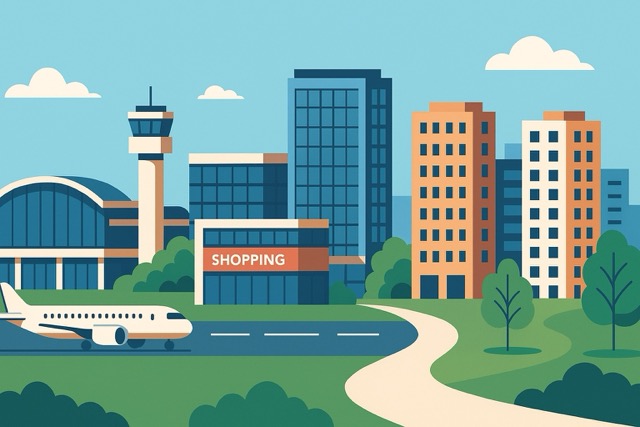
Airports are no longer just gateways for travel—they’re becoming ecosystems for work, life, and commerce. As global cities grow outward, and air traffic continues to surge, you’re seeing a shift in how airports operate. The idea of the “airport city” isn’t theory anymore. It’s a working model where terminals are just one part of a much larger urban hub. From luxury apartments and shopping centers to logistics zones and corporate campuses, airport cities are reshaping how people live and move. This article walks you through how these hubs are designed, why they matter, and what role they’ll play in the next wave of global urban development.
Airport Cities: From Transit Points to Economic Powerhouses
At the core of this shift is the aerotropolis—a planning model that treats the airport not just as infrastructure but as the central business district of a metropolitan area. You’re seeing cities grow around airports rather than the other way around. When a region links aviation with logistics, commerce, and real estate in a single integrated zone, it drives faster economic expansion and offers greater convenience for travelers and residents. These developments pull in international businesses, boost property values, and generate consistent revenue streams through diversified land use.
It’s not a theory anymore. Cities like Dallas-Fort Worth, Amsterdam, and Seoul are already capitalizing on this model. Their airports are surrounded by hotel districts, conference centers, shopping plazas, data centers, and even residential communities—turning layovers into business opportunities and long-haul commutes into doorstep access.
Economic Potential and New Revenue Models
As an investor or planner, you know that traditional airport revenues—landing fees, parking, and concessions—aren’t enough anymore. Non-aeronautical revenue streams are now the main growth lever. Think retail malls, high-rise office spaces, convention centers, logistics warehouses, and premium accommodations—all within walking distance of check-in counters.
This setup appeals to more than just airlines. Real estate developers, hospitality firms, and logistics companies are buying into airport-adjacent land to tap into the growing travel economy. And governments are onboard too. They see long-term job creation and GDP gains as good reasons to prioritize airport infrastructure in national development plans.
Mixed-Use Design: Where Daily Life Meets Terminal Traffic
You can already work, shop, eat, and sleep at many airports. But now, developers are going further—creating mixed-use districts that make airport cities feel less like terminals and more like modern neighborhoods. Residential zones, international schools, healthcare centers, and entertainment complexes are being built alongside terminals. These aren’t isolated projects—they’re connected by trams, underground walkways, or smart mobility corridors.
One standout example is Yogyakarta International Airport in Indonesia. Its airport city blueprint includes everything from dormitories and MICE (meetings, incentives, conferences, exhibitions) facilities to a university campus and sports center. You’re no longer just flying through a place—you’re living in it, launching a startup next to the runway, or attending an event across from the tarmac.
Technology Makes the Model Work
To integrate all these services and amenities effectively, airport cities rely on smart infrastructure. Biometric verification for seamless check-in, virtual queuing, dynamic signage, and app-controlled transportation are all part of the experience. The more friction you remove from travel, the more people choose these airports—not just as stopovers, but as destinations.
Energy systems are also getting smarter. Many airport cities are built with solar farms, EV charging grids, rainwater harvesting systems, and green roofs to meet environmental standards and reduce long-term operational costs. These aren’t just upgrades—they’re necessities for staying competitive and compliant with international green building regulations.
Real-World Examples Setting the Standard
Airport cities aren’t just taking shape—they’re operating at scale.
- Denver International Airport is one of the largest landowners in the U.S., with an expansion strategy focused on converting non-aeronautical land into mixed-use commercial and hospitality zones. You’ll see entire districts forming around terminal access points, with infrastructure designed for rapid mobility.
- Taoyuan Aerotropolis in Taiwan is a multi-phase urban project adding logistics hubs, industry zones, housing, and transit-oriented commercial centers across 4,500 hectares. Its planners expect it to add hundreds of thousands of jobs and create a global trade corridor.
- The Ellinikon in Greece is repurposing a decommissioned airport into Europe’s largest smart city—with skyscrapers, high-end shopping, a marina, and green spaces. Its design is focused on walkability, luxury, and sustainability, setting a new bar for airport city living.
These examples aren’t just massive—they’re strategically designed to blend global access with local value.
What You Should Consider Before Entering the Market
Airport cities come with real promise, but there are complexities. As an investor, developer, or policymaker, you need to pay attention to zoning regulations, land rights, and environmental assessments. Some projects have faced backlash due to displacement concerns, lack of transparency, or misalignment with community needs.
If you’re planning, your approach needs to be proactive and inclusive. Long-term partnerships with local stakeholders—governments, businesses, and residents—are key to maintaining momentum and public support. Transparent planning and clear sustainability goals make the difference between a stalled project and a globally recognized hub.
Looking Ahead: What Comes Next?
With air traffic set to grow steadily over the next decade, and business models shifting toward remote mobility and hyperconnectivity, the airport city model fits perfectly into the way the modern economy moves. You’re going to see more of these cities spring up—especially in Asia, the Middle East, and Africa where air travel demand is highest and land near airports is still available for development.
Expect stronger emphasis on 24-hour connectivity, luxury experiences, and live-work environments. Data centers, fintech zones, and even medical tourism hubs are starting to show up inside airport cities. This isn’t just about air travel—it’s about creating high-efficiency zones where access meets opportunity.
What Makes Airport Cities the Future?
- Airports are becoming urban hubs
- They combine travel, business, and housing
- Smart tech improves operations and mobility
- New revenue models drive economic growth
- They support job creation and urban expansion
In Conclusion
Airport cities represent a bold reimagining of urban space. When you integrate terminals with tech-enabled commerce, walkable communities, and economic incentives, you create more than just a travel hub—you build a living, breathing part of a city. As travel patterns change and technology reshapes how we live and work, the airport city stands out as a model built for the future. It’s efficient, ambitious, and packed with potential—and if you’re thinking long term, it’s an investment idea worth more than just a passing glance.
Explore more insights on business and innovation on this Crunchbase profile: Discover professional background and connections.

Chrysilios Chrysiliou is a commercial real estate executive at RDPH Properties, Inc. with a diverse background in aviation and entrepreneurship. A former Greek Air Force Academy graduate, flight instructor, and flight school co-owner, he now leverages decades of strategic leadership to identify and develop high-value real estate opportunities.